![Murder Arena [FPS] Wiki logo](/images/site/logo.webp)
Pick a position you can leave
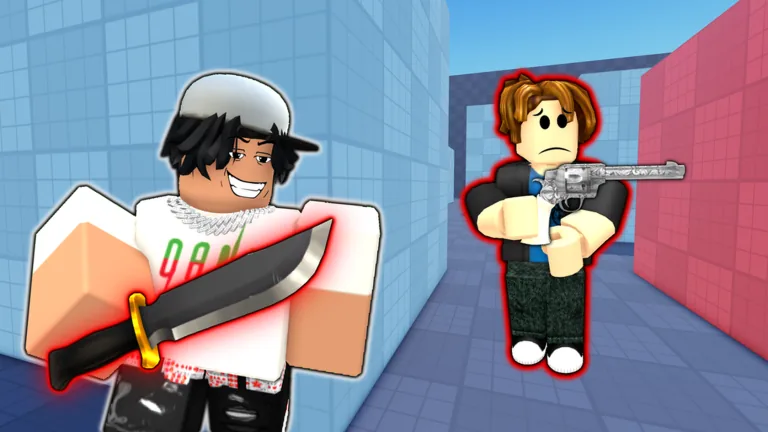
Good positioning in Murder Arena starts with a simple test: can you see the next approach, and can you move if a second player appears? The official images show grid-walled corridors where walls divide a visible lane from nearby spaces. Use those edges to check one opening at a time. Standing in the middle of a lane may offer a clear view, but it also leaves more directions open to other players in a free-for-all.
Choose an edge that lets you watch the encounter you want without hiding every exit from yourself. That may mean stepping back to a wall before you engage or shifting sideways until you can see the next opening. The right place changes as other players move. No fixed spot stays useful just because it worked during the previous duel.
Read the corner before crossing it
At a corner, stop making decisions from the last view you had. Turn your camera toward the opening and look for movement before entering the new lane. You do not need a long pause. One quick check can tell you whether the space is open, occupied, or still partly hidden. If you cannot read it yet, adjust your position until you can.
The wall beside you can interrupt an opponent’s view, but it can also block yours. Move toward the edge in small steps and look through the part that opens first. If a player is already watching the lane, you can choose whether to engage from that edge or retreat and find another approach. Crossing the entire opening before looking removes that choice.
This habit applies whether you are holding a revolver, a knife, or another option shown in the current game. The two official images show revolver and knife encounters; they do not prove a complete weapon list. Positioning is the part you can improve from the pictured arena regardless of which equipment you have in a live round.
Manage the sightline, then the duel
A sightline is the open view between you and another player. Before a duel, check where the walls cut that view off. If your target moves behind a wall, the line is broken; their old position is no longer enough to guide your next move. Shift to see the next opening, then decide whether to follow.
Try to avoid fighting from a place where several openings feed into the same exposed point. In Murder Arena’s free-for-all format, another player has no reason to wait for your first exchange to finish. A position that shows one target while letting you check a nearby side lane gives you more information than a position that shows only the target. If another player appears, you need room to respond.
| Position question | What to look for | Next move |
|---|---|---|
| Can I see the target clearly? | A current line of sight rather than a last-known position. | Adjust at the wall edge until the target is visible. |
| Who could enter from the side? | The nearest unchecked opening. | Scan it before holding a long duel. |
| Where can I leave? | A route you can reach without crossing the target’s whole lane. | Keep that route available or choose another edge. |
| Did the fight change? | A new player, a disappearing target, or a blocked angle. | Reposition and rebuild your view. |
Move between useful edges
Changing position does not mean running constantly. Move when the current edge no longer gives you a useful view or when your repeated presence makes the angle easy to predict. After a duel, check the side that you could not watch while fighting. Then move to a different edge if it gives you a better view of the next lane. This is a series of small, informed changes rather than a memorized route through an unseen map.
If you have to cross an open lane, do it for a reason. Identify the wall or corner you are heading toward and what you expect to see when you reach it. Look across the exposed space before entering. While crossing, keep your camera on the most likely approach you can see, then check the new side opening once you arrive. If another player has changed the lane, stop using the original plan.
The official pictures show a grid style, but they cannot establish every map, spawn point, or exact route in the live game. Treat the visible wall edges as an example of how to think. In your current match, use the geometry you actually see and update the route when players move.
Practice one lap of observation
For one session, give yourself a task beyond winning the next fight. At every new corner, name the visible opening, the hidden side, and the nearest way back. You may find that you have been watching the target without noticing the side entrance. Once you can name those three things quickly, your movement becomes less dependent on surprise.
After a lost duel, reconstruct the position rather than only the final shot. Which edge did you use? What could you see from it? Where did the other player enter? Could you have moved to a wall before committing? Choose one earlier decision to change. Sometimes the useful correction is an aim adjustment; often it is the place from which you tried to aim.
The cue to remember is edge, opening, exit. Start near an edge, check the opening you want to use, and leave yourself an exit. As the fight moves, run the check again. A good position is the one that makes the next decision readable, not the one you held longest.
FAQ
Where should I stand before taking a duel?
Choose a wall edge that gives you a current view of the target and a route away if another player arrives. Reassess that position as the fight moves.
How do I check a corner safely?
Turn toward the next opening and reveal it in small steps. Look before crossing the entire lane, then decide from the view you have now.
Should I stay in one strong position for the whole round?
Move when the angle stops showing useful information or another player changes the lane. A repeated spot can become easy for others to check.
Do the screenshots show every Murder Arena map?
No. They show grid-walled corridors in two official images. Use the same corner and sightline checks on the geometry present in your current match.
What should I review after losing a duel?
Look at the edge you fought from, the openings you could see, and where the other player entered. Change the first position choice that left you exposed.